M&N SOFT / ENGINEERING 002
What Does Custom Software Really Cost for a U.S. Business in 2026?
There is no universal price for custom software. A focused internal tool, a customer portal, a transportation management system, a marketplace, a mobile application and an AI-enabled enterprise platform can all be called “custom software” while representing radically different engineering problems. This report examines publicly available market data, common project structures and the factors that determine what a business may actually spend.
IMPORTANT PRICING NOTE
These are market references — not M&N Soft prices.
The dollar amounts and hourly rates discussed in this report are not M&N Soft prices, rates, quotes, offers or guarantees.
The figures in this article are market reference ranges compiled from publicly available industry sources and examples. They are provided for informational and analytical purposes only.
An actual software estimate can only be prepared after understanding the required functionality, users, workflows, integrations, data, security requirements, infrastructure, deployment model, timeline and expected level of ongoing support.
Two applications that appear nearly identical on a screen can have dramatically different costs underneath. Authentication, permissions, audit history, integrations, data migration, synchronization, reporting, mobile support, regulatory requirements, availability targets and security controls may represent much more engineering work than the visible interface itself.
01 / THE SHORT ANSWER
So, how much does custom software cost?
The most accurate short answer is that custom software exists across a very wide market. Small focused systems can require relatively modest budgets, while large operational platforms can become six-figure or even seven-figure technology investments.
Clutch's 2026 Software Development Pricing Guide reports that custom software projects represented in its review data commonly fall in the $10,000–$49,999 range. The same guide reports an average reviewed software development project cost of approximately $132,480.
Those numbers should not be interpreted as a universal price list. They describe a dataset containing many different companies, countries, project types, scopes and engagement models.
Common project range reported in Clutch's 2026 software development pricing data — not an M&N Soft rate.
Average project cost reported by Clutch from its reviewed project dataset. This is a market statistic, not a recommended budget.
02 / MARKET REFERENCE RANGES
Different software belongs to different cost categories.
For planning purposes, businesses often find it more useful to think in project categories rather than asking for one average software price. The ranges below are broad market planning references synthesized from public industry pricing discussions. They are not quotations from M&N Soft.
| Project category | Illustrative market range | Typical scope |
|---|---|---|
| Focused internal tool | $10K–$30K+ | One workflow, limited roles, basic reporting |
| MVP / early product | $15K–$60K+ | Core product hypothesis and essential functionality |
| Custom business web application | $25K–$100K+ | Users, database, permissions, dashboards, workflows |
| Customer or employee portal | $30K–$120K+ | Accounts, documents, workflows, integrations |
| Complex operational platform | $75K–$250K+ | Multiple departments, roles, automation and integrations |
| Marketplace / SaaS platform | $75K–$300K+ | Multi-sided users, payments, messaging, search, admin |
| Web + native mobile ecosystem | $100K–$350K+ | Backend, web application, iOS/Android and synchronization |
| Large enterprise platform | $200K–$1M+ | Complex architecture, integrations, security and scale |
These bands intentionally overlap. A “portal” might be a simple document viewer or the central operating system of a company. Calling both projects a portal says almost nothing about their engineering complexity.
The purpose of a range is therefore not to predict the final invoice. It is to help a business determine whether an idea is likely to be a small internal project, a substantial operational investment or a major software platform.
03 / U.S. DEVELOPMENT RATES
Where the development team is located changes the economics.
Clutch's August 2026 pricing guide lists software development companies in the United States at approximately $50–$99 per hour in its location-based pricing data.
Other providers, specialized consultancies and senior engineering teams may quote substantially different rates. Hourly pricing also does not tell you how many hours a project requires, how efficiently those hours are used or what disciplines are included.
A lower hourly rate does not automatically produce a lower project cost. Architecture mistakes, repeated revisions, unclear requirements, weak testing or rebuilding failed components can overwhelm the apparent savings of a cheaper rate.
Rate × hours is only the visible equation. The quality of decisions made during those hours can determine the real cost of the system.
04 / WHAT YOU ARE ACTUALLY PAYING FOR
Software development is much more than writing code.
IBM describes the software development lifecycle through planning, analysis, design, coding, testing, deployment and maintenance. That lifecycle helps explain why estimating a serious software system from a list of screens alone can be misleading.
Discovery and requirements
Before implementation begins, someone must understand what the organization actually does. Existing spreadsheets, email workflows, documents, approvals, permissions, exceptions and external systems need to be mapped into requirements.
Architecture
Engineers decide how data is structured, where business logic lives, how services communicate, how authentication works, how the system scales and how future functionality can be introduced without rebuilding everything.
Product and interface design
Good software is not merely attractive. The interface has to reflect the actual workflow of the people using it every day.
Engineering
Frontend applications, backend services, databases, APIs, authentication, background jobs, notifications, document generation, search, analytics and other components must work together.
Testing and quality assurance
Software must be tested against expected behavior and unexpected behavior. Edge cases become especially important when the application controls money, documents, customer information or operational decisions.
Deployment and infrastructure
Production environments require configuration, domains, certificates, databases, storage, backups, monitoring and a deployment strategy.
Maintenance
Deployment is not the end of a software lifecycle. Dependencies change, operating systems evolve, APIs are updated, vulnerabilities are discovered and businesses change their own processes.
05 / COMPLEXITY
The number of screens is a poor measure of software complexity.
Imagine two systems with ten screens each.
System A is an internal catalog. Employees sign in, search records, edit a few fields and export a report.
System B has administrators, customers, contractors and accountants. Each role sees different information. Transactions trigger notifications. Documents require signatures. External APIs provide data. Financial calculations need audit history. Mobile users must upload photographs. Management needs analytics.
Both systems can have ten visible screens. Their engineering scope is not remotely equivalent.
06 / USER ROLES & PERMISSIONS
“Add another user type” can be a major architectural requirement.
A single-user application is fundamentally different from a system serving employees, managers, customers, vendors, administrators and accountants.
Role-based access can affect database queries, APIs, interface visibility, editing permissions, approvals, notifications and audit logs.
In operational software, the question is often not simply whether a user can open a page. It is whether that person can view, create, modify, approve, export or delete a specific piece of information under a specific business condition.
07 / INTEGRATIONS
Your software rarely lives alone.
Modern business software may need to communicate with accounting platforms, payment providers, mapping services, email systems, identity providers, CRM software, telephony systems, cloud storage, government services, shipping systems or proprietary APIs.
Each integration introduces another technical contract. Data formats must be translated. Authentication must be managed. Failures need handling. Rate limits may exist. External providers may change their APIs.
This is why “connect it to our existing software” can represent anything from a few hours of work to a substantial engineering project.
Learn more about how M&N Soft approaches business process automation and integration of disconnected workflows.
08 / DATA MIGRATION
The old spreadsheet does not disappear by itself.
Companies replacing spreadsheets or legacy software often already possess years of operational data.
Names may be inconsistent. Dates may use different formats. Duplicate records may exist. Columns may have changed meaning over time. Documents may live in multiple folders.
Moving this information into a structured database requires extraction, normalization, validation and often manual business decisions.
This is one of the hidden costs that can be missed when a software estimate focuses only on new features.
Our Engineering 001 report examines this transition in Why Are Businesses Still Running Critical Operations Through Excel?
09 / MOBILE APPLICATIONS
Adding mobile changes more than the screen size.
A responsive website and a native mobile application are different products.
Native applications may involve iOS and Android development, application signing, App Store and Google Play distribution, push notifications, device permissions, camera access, background behavior, secure credential storage and compatibility with new operating-system releases.
When web and mobile clients share the same backend, API design and synchronization become even more important.
10 / AI
Adding AI does not automatically mean rebuilding the product.
AI integration can range from a focused assistant calling an existing model API to a much larger architecture involving retrieval, document processing, structured outputs, evaluation, human review, permissions and proprietary data.
The cost therefore depends less on the word “AI” and more on what the system must reliably accomplish.
A customer support summarizer is a different engineering problem from an AI system making recommendations across private operational data.
See M&N Soft's approach to AI integration for business.
11 / SECURITY
Security is part of software engineering, not a final checkbox.
Authentication, authorization, secrets management, dependency management, logging, secure deployment and vulnerability handling influence both architecture and development effort.
NIST's Secure Software Development Framework recommends integrating secure software development practices into the software development lifecycle rather than treating security as something separate from engineering.
The requirements become more significant when a system processes sensitive company information, personal data, financial records or privileged operational information.
12 / INFRASTRUCTURE
The application needs somewhere reliable to live.
Hosting costs are only one part of infrastructure. Production systems may require databases, object storage, backups, monitoring, logging, DNS, TLS certificates, email delivery, push notifications, queues, caching and disaster recovery.
A small application can use a relatively simple architecture. A high-traffic marketplace or mission-critical operating platform may require redundancy and considerably more infrastructure work.
13 / MVP
An MVP is not supposed to be the entire company vision.
One of the most effective ways to control development cost is to identify the smallest version of a product that proves the central business assumption.
This does not mean building disposable software. It means separating essential architecture and functionality from features that can reasonably wait.
A disciplined MVP may answer one critical question: will the proposed workflow actually save time, attract users, generate revenue or solve the operational problem?
14 / BUILD VS BUY
Custom software is not always the correct answer.
If an existing SaaS product already solves 90 percent of the problem at a reasonable subscription cost, building a replacement may make little economic sense.
Custom development becomes more compelling when the workflow itself is unusual, existing products create substantial manual work, multiple disconnected systems need to be unified, proprietary logic creates competitive advantage or software is becoming part of the company's product.
The question is not “Can this be custom-built?” Almost anything can. The better question is “Does owning this system create enough value to justify building and maintaining it?”
15 / THE COST OF NOT BUILDING
Manual processes have a software budget too — it is simply hidden.
Suppose five employees each spend one hour per day copying information between spreadsheets, email and another system.
That is approximately 25 employee-hours every week before accounting for mistakes, corrections, management review or delays.
Over a year, repetitive administrative work can become a significant operational expense.
This is why the financial comparison should not be custom software versus zero dollars. It should compare development and maintenance against the cost of the process the software is intended to replace or improve.
16 / HIDDEN COSTS
What businesses frequently forget to budget for.
- Discovery and requirements analysis
- UI and workflow design
- Data migration and cleanup
- Third-party API integration
- Cloud infrastructure
- Email and notification services
- Security review
- Quality assurance
- Application store requirements
- Monitoring and backups
- User training
- Documentation
- Post-launch support
- Future feature development
A good estimate should make assumptions visible instead of hiding them behind one attractive total.
17 / PRICING MODELS
Fixed price, hourly, time & materials or dedicated team?
Fixed price
Useful when requirements are sufficiently stable and both sides can define what is included.
Hourly
Straightforward for smaller engagements, consulting and evolving work where exact scope is difficult to predict.
Time & materials
Often used for iterative products where priorities can change as the team learns from implementation and users.
Dedicated team
Appropriate when software development is an ongoing capability rather than a single finite project.
Clutch's 2026 pricing material also identifies hourly, fixed-price, time-and-materials and dedicated-team structures among common software development pricing models.
18 / REAL-WORLD SYSTEMS
Operational software becomes valuable when it reflects the operation.
M&N Soft's own engineering work includes systems where software is connected directly to real business workflows rather than existing as an isolated website.
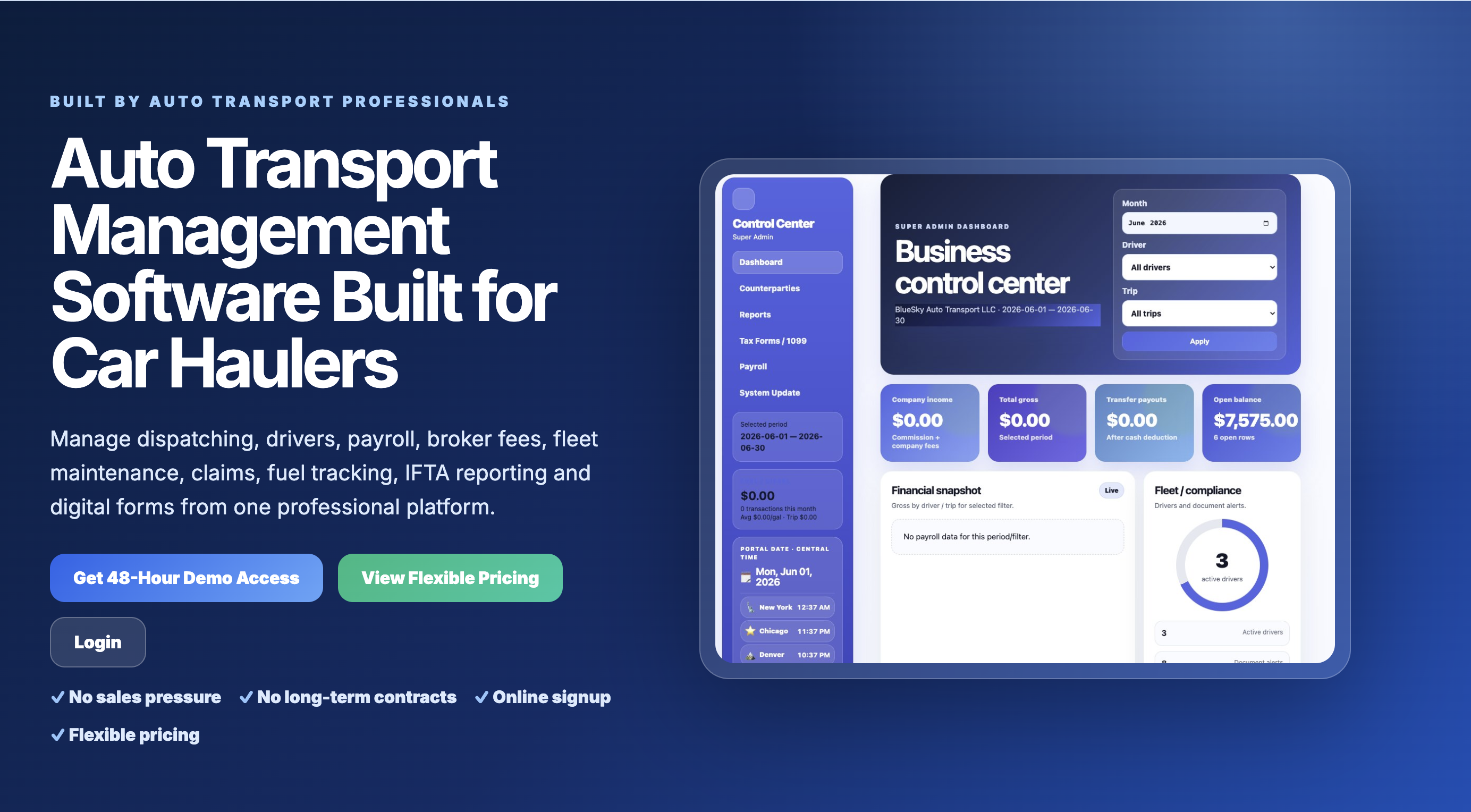
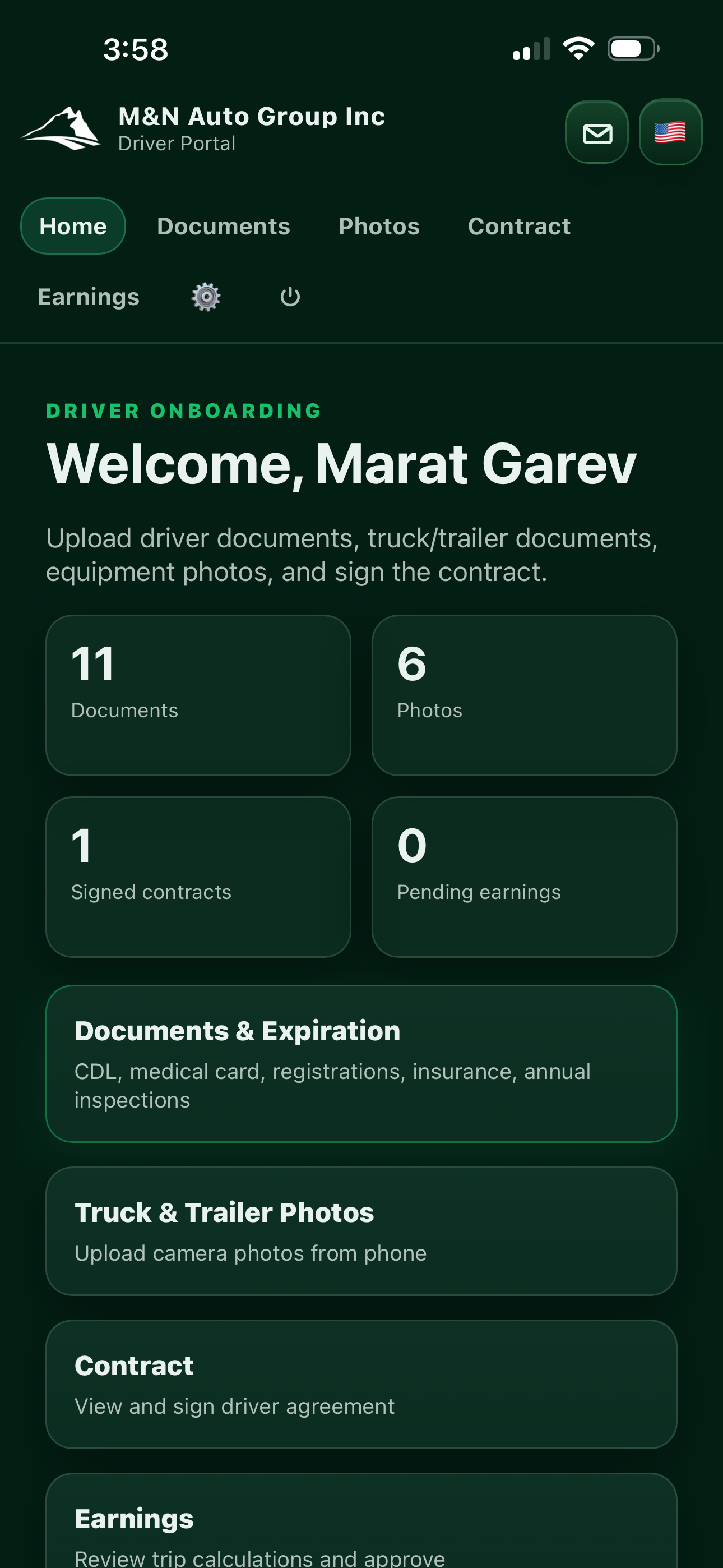
Driver Portal, for example, demonstrates the architecture of a specialized transportation system involving dispatch operations, drivers, settlements, claims, fleet information, documents and role-based workflows.
Read the Driver Portal transportation software case study.
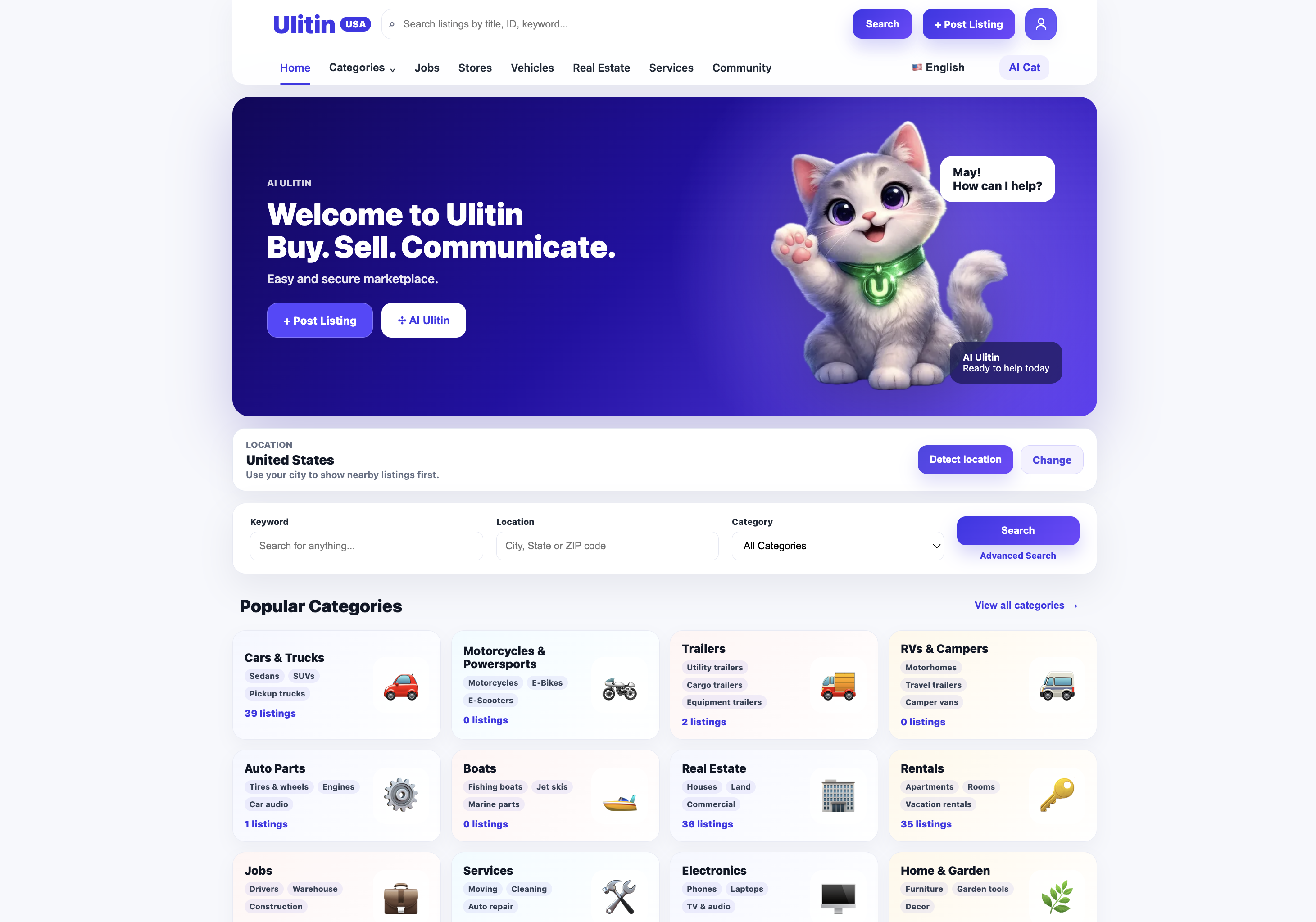
Ulitin demonstrates a different architecture: a marketplace involving listings, local discovery, business stores, messaging, multilingual functionality and AI-assisted workflows.
Read the Ulitin marketplace case study.
19 / HOW TO GET A BETTER ESTIMATE
Do not start with a feature wishlist. Start with the business problem.
A development team can estimate more accurately when it understands the current workflow.
Useful information includes who uses the process, what systems are involved, what data moves between them, which steps are manual, what frequently goes wrong and what outcome the company wants to improve.
Existing spreadsheets, screenshots, forms, PDFs and process diagrams can often explain more than a generic requirement such as “we need a CRM.”
20 / QUESTIONS TO ASK A SOFTWARE COMPANY
A quote should answer more than “how much?”
- What exactly is included in the scope?
- What assumptions were used to create the estimate?
- Is design included?
- Is infrastructure setup included?
- Are integrations included?
- Who owns the source code?
- How are scope changes handled?
- How is testing performed?
- What happens after launch?
- What recurring third-party costs should we expect?
- How are security and access control handled?
- How will future features be added?
21 / M&N SOFT APPROACH
We price the system after understanding the system.
M&N Soft does not use the market ranges in this article as a price list.
When evaluating a project, we first try to understand the business process, existing tools, users, data, required integrations and the outcome the company is trying to achieve.
Depending on the problem, the correct recommendation may be a custom application, automation between existing services, an internal portal, an AI integration, a smaller MVP or even an existing off-the-shelf product.
Explore our custom software development services, web application development, AI integration services and business process automation.
22 / FAQ
Frequently asked questions about custom software cost.
How much does custom software development cost in the USA?
There is no universal project price. Public market data shows a wide range depending on complexity, team location and scope. Clutch's 2026 dataset reports many reviewed projects between $10,000 and $49,999, while its reported average project cost is substantially higher. Complex systems can exceed these figures considerably.
How much does a custom web application cost?
A web application's cost depends on far more than the number of pages. Authentication, roles, workflows, databases, integrations, reporting, security and infrastructure can substantially change the engineering scope.
Is an MVP cheaper?
Usually an MVP reduces initial scope by focusing on the essential product hypothesis. It should still be engineered carefully enough that successful functionality can evolve rather than requiring an immediate rewrite.
Does AI make software more expensive?
Not necessarily. A focused API-based AI feature can be relatively contained. Complex AI systems involving proprietary data, retrieval, evaluation, permissions and human review require more engineering.
Why do software quotes vary so much?
Teams may be estimating different scopes, architectures, quality levels, staffing models and assumptions. Location and experience also affect rates.
Are the prices in this article M&N Soft prices?
No. All market ranges discussed here are informational references based on publicly available sources and industry examples. They are not M&N Soft prices, quotes or offers.
How can I get an actual estimate?
An estimate requires a real scope. Describe the business process, users, current tools, integrations and desired outcome. M&N Soft can then evaluate the project based on its actual requirements.
23 / CONCLUSION
The correct software budget begins with understanding the problem.
Searching for the average cost of custom software is useful for establishing expectations, but averages cannot price an individual system.
A focused internal application and a nationwide marketplace are both software. Their architecture, risk, development effort and long-term responsibilities are completely different.
The useful question is therefore not simply “How much does software cost?”
What does our business need the software to accomplish — and what is the simplest reliable system that can accomplish it?
Once that question is answered, engineering scope becomes clearer, estimates become more meaningful and the decision between building, integrating, automating or buying becomes much easier.
SOURCES & METHODOLOGY
Public sources used for market and engineering context.
Pricing information in this report is used as market context rather than as a M&N Soft price list. Public pricing data changes over time, and readers should consult the original sources for their latest figures.
Clutch — Software Development Company Pricing Guide 2026 ↗
Clutch — How to Budget for Custom Software Development ↗
IBM — Software Development Life Cycle (SDLC) ↗
NIST — Secure Software Development Framework (SSDF) SP 800-218 ↗
NIST — Secure Software Development Framework Project ↗
The project-category ranges presented earlier in this report are broad illustrative planning bands synthesized from publicly available software-development pricing discussions. They should not be treated as statistical benchmarks or vendor quotations.
DISCUSS YOUR PROJECT
Market averages cannot estimate your specific software.
If your company is considering replacing spreadsheets, automating a workflow, building an internal portal, integrating AI or developing a new digital product, describe the operation to us.
We can review the workflow and determine what should actually be built before discussing an estimate.