ENGINEERING / 007
How Can AI Agents Actually Work
Inside a Transportation Company?
A practical architecture for AI agents in transportation: dispatch assistance, document processing, ETA monitoring, customer communication, accounting workflows, claims, approvals, APIs and audit trails.
01 / FROM CHATBOT TO AGENT
An AI agent is useful when it can participate in a real workflow.
A chatbot waits for a question. An operational AI agent can receive an event, collect context from approved systems, evaluate rules, prepare an action and either execute it or request human approval.
OPERATIONAL EVENT
        ↓
     AI AGENT
        ↓
  COLLECT CONTEXT
        ↓
   APPLY RULES
        ↓
  PROPOSE ACTION
     ↙       ↘
APPROVE     AUTOMATE
   ↓           ↓
HUMAN       SYSTEM
   └─────┬─────┘
         ↓
AUDIT LOG02 / DISPATCH AGENT
An AI agent can assist dispatch without replacing the dispatcher.
A dispatch agent can combine structured information about loads, drivers, equipment, locations, schedules and operational constraints to help identify possible assignments or exceptions.
Instead of autonomously making every dispatch decision, the system can present recommendations with the information used to produce them. A dispatcher remains responsible for decisions that require operational judgment.
03 / ETA AND EXCEPTION MONITORING
The agent can watch operations continuously instead of waiting for someone to notice a problem.
LOCATION / STATUS / SCHEDULE
             ↓
        MONITORING AGENT
             ↓
       EXPECTED vs ACTUAL
          ↙       ↘
       NORMAL    EXCEPTION
                    ↓
              DISPATCH ALERT
                    ↓
             HUMAN DECISION
The useful capability is not merely predicting an ETA. It is detecting when reality diverges from the expected workflow and bringing the right exception to the right person.
04 / DOCUMENT AGENT
Transportation produces documents at almost every operational stage.
Rate confirmations, bills of lading, delivery documents, invoices, receipts, inspection images and other files can arrive through different channels.
An AI-enabled document workflow can classify incoming files, extract relevant fields, connect them to the correct load and flag uncertain information for review.
DOCUMENT
   ↓
CLASSIFY
   ↓
EXTRACT DATA
   ↓
VALIDATE
   ↓
MATCH TO LOAD
   ↓
CONFIDENCE CHECK
 ↙             ↘
HIGH          UNCERTAIN
 ↓               ↓
STORE        HUMAN REVIEW
05 / COMMUNICATION AGENT
AI can prepare communication without giving it unlimited authority to speak for the company.
Operational data can be converted into useful customer or broker updates. The agent might prepare an ETA update, request a missing document or summarize a delay.
Sensitive messages, contractual statements and unusual situations should still require approval before being sent.
06 / ACCOUNTING AND SETTLEMENTS
Financial workflows need stronger controls than ordinary automation.
An agent may identify missing documents, compare expected and recorded amounts, prepare settlement information or surface inconsistencies. It should not silently change financial records simply because a model believes something is incorrect.
The system should distinguish between analysis, recommendation, approval and execution.
07 / CLAIMS
Claims are a good example of why AI needs structured context.
A claim may involve a load, vehicle, driver, customer, photographs, documents, timestamps, communication and financial information. An agent can organize this context and identify missing information, while consequential decisions remain controlled by people and established company policy.
08 / APIs ARE THE HANDS OF THE AGENT
An agent needs controlled interfaces to interact with business systems.
Reading a database directly or giving an AI unrestricted system access is rarely a good architecture. Business capabilities should be exposed through controlled APIs and services with authentication, validation and permissions.
See Engineering 005: API Integration for Business Systems for the integration architecture behind this model.
09 / HUMAN-IN-THE-LOOP
The agent needs an authority boundary.
LOW RISK
AI ─────────────────────► EXECUTE

MEDIUM RISK
AI ─────► RECOMMEND ─────► HUMAN APPROVAL ─────► EXECUTE

HIGH RISK
AI ─────► COLLECT CONTEXT ─────► HUMAN DECISION
The boundary should depend on business impact, confidence, permissions and the reversibility of an action — not on how convincing the model sounds.
10 / AUDITABILITY
Every consequential agent action should be explainable after the fact.
A production system should record what triggered the agent, which information it accessed, what action it proposed, whether approval was required, who approved it and what ultimately happened.
11 / MULTI-AGENT ARCHITECTURE
One giant AI agent does not need to control the entire company.
                OPERATIONS PLATFORM
                        │
       ┌────────────────┼────────────────┐
       ↓                ↓                ↓
 DISPATCH AGENT   DOCUMENT AGENT   FINANCE AGENT
       │                │                │
       └────────────────┼────────────────┘
                        ↓
              RULES + PERMISSIONS
                        ↓
                 HUMAN APPROVAL
                        ↓
                   AUDIT LOG
Specialized agents can operate with narrower context and permissions. This can make the architecture easier to control, test and observe.
12 / BUILD THE FOUNDATION FIRST
AI agents amplify the architecture underneath them.
If operational data is inconsistent and workflows are undefined, adding agents can automate confusion. A transportation company should first establish reliable systems, identifiers, permissions, APIs, events and audit trails.
This is the architecture described in Engineering 006: Automating Transportation Operations in 2026.
13 / M&N SOFT
AI should become part of the operating system — not another isolated subscription.
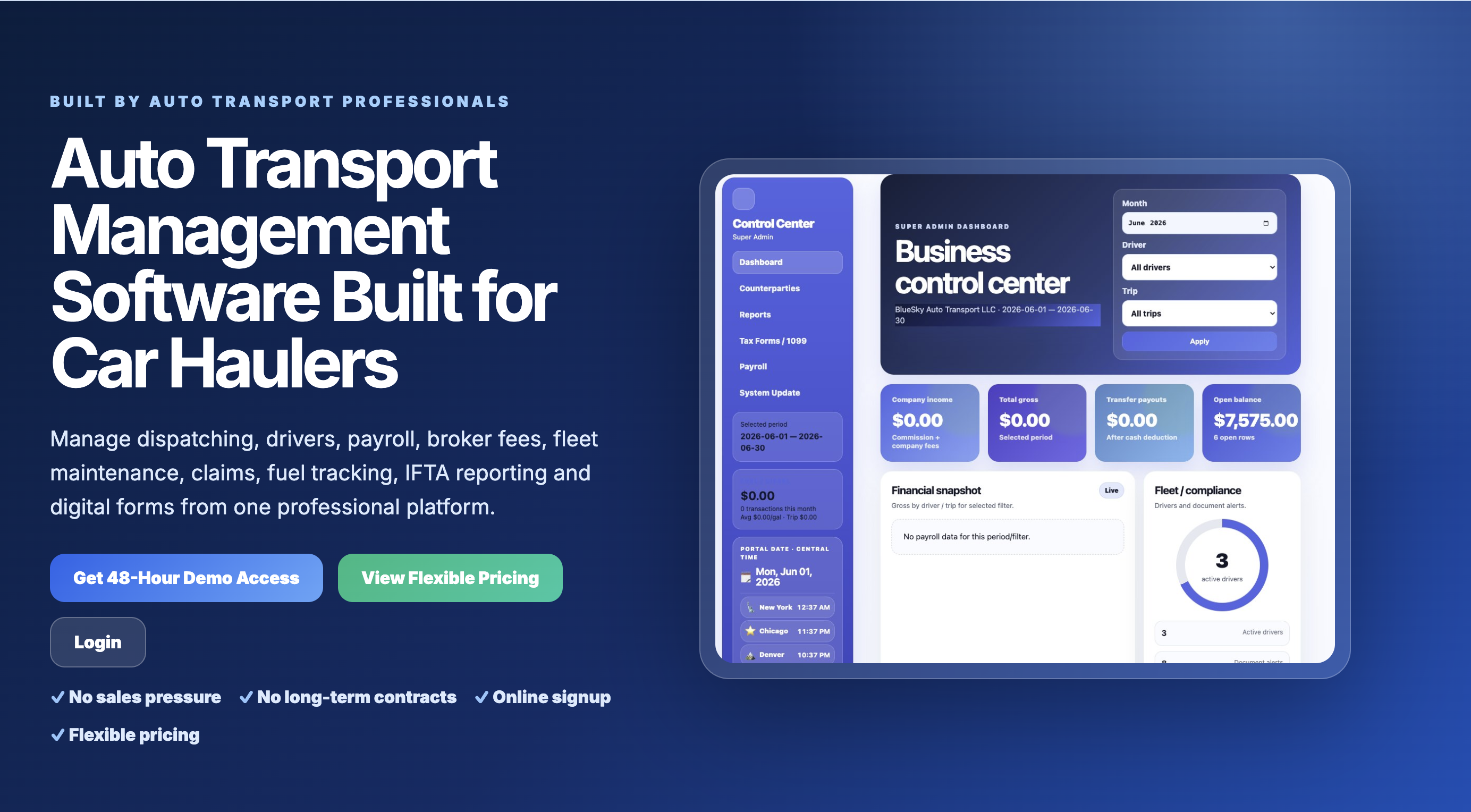
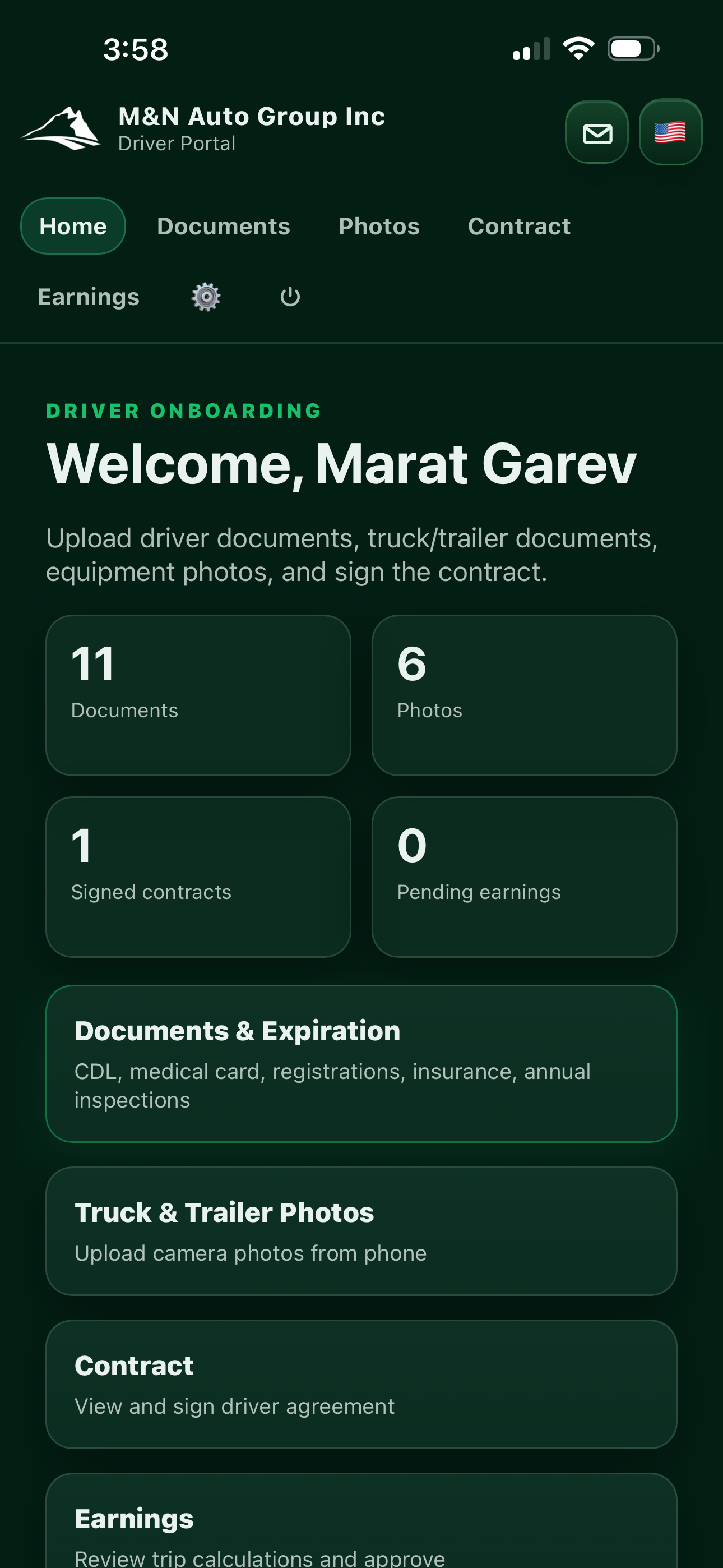
M&N Soft builds transportation software, internal portals, API integrations, workflow automation and AI-enabled systems around real operational processes.
Explore our transportation software development or discuss an AI automation project.